The Italian Cabinet is a boutique studio in South Florida that works directly with Italian manufacturers to deliver handcrafted cabinetry, wardrobes, and interior doors for high-end residential projects in the Miami area. When they launched their new website at theitaliancabinet.com in early March 2025, it had everything a potential customer would expect: detailed product pages, information about their manufacturing partnerships, and an easy way to book a showroom consultation.
But when someone asked ChatGPT, Perplexity, Grok or Gemini about Italian cabinetry options in Miami, The Italian Cabinet was nowhere in the conversation. The website existed, the business was real, and AI simply didn’t know about it.
AI Visibility Score on March 11: zero
We ran the first Reachd.ai scan on March 11, and the dashboard came back entirely empty. Across five different customer queries tested on three AI platforms, the business wasn’t mentioned in a single response.
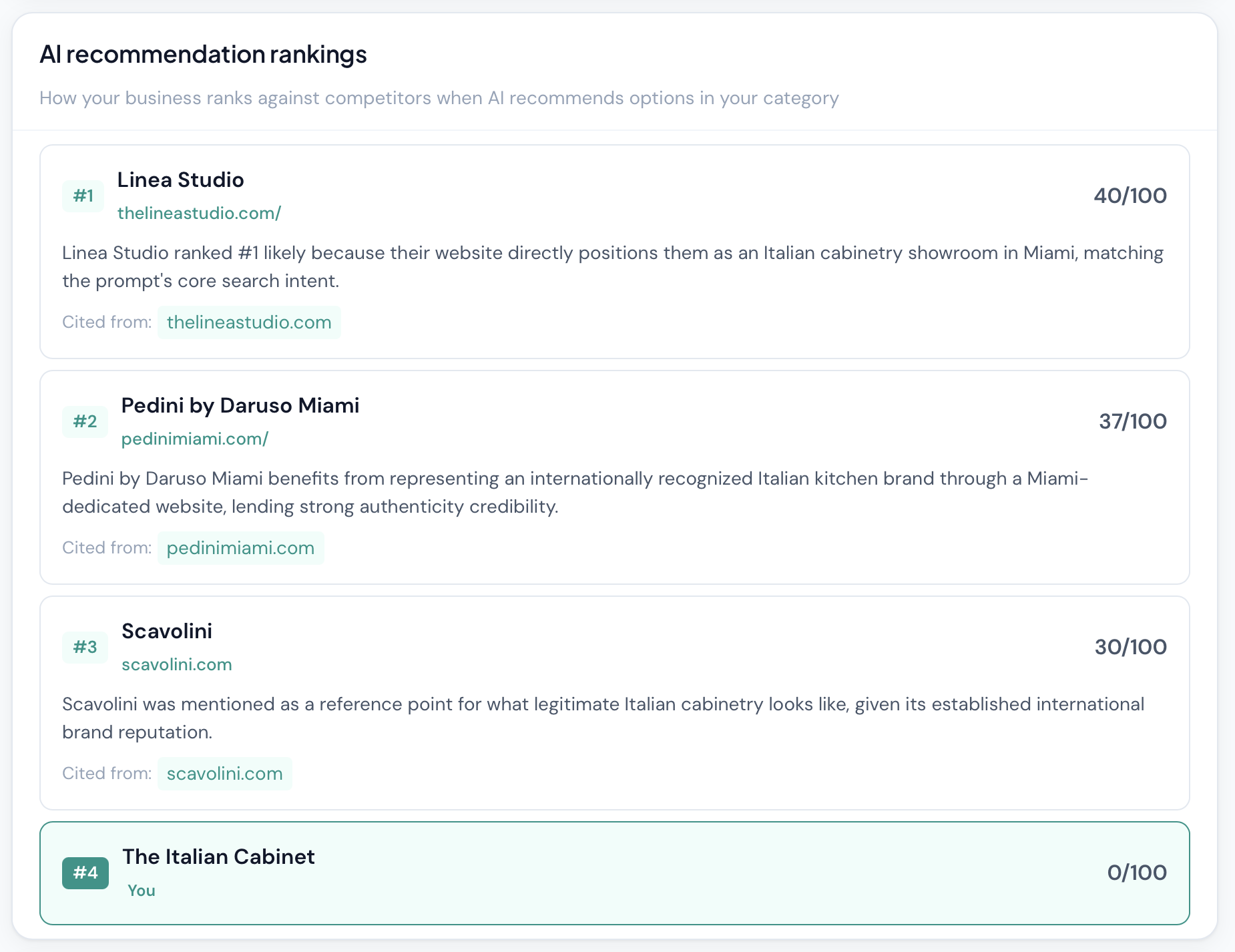
Competitors with longer web histories were collecting all the AI recommendations for searches like “custom Italian cabinetry in Miami” and “where to find a showroom for Italian kitchen cabinets in South Florida.” For a business where a single project often falls in the $30,000 to $80,000 range, each of those missed recommendations carries real financial weight.
What the scan revealed
The analysis pointed to a combination of factors that made The Italian Cabinet essentially invisible to AI models:
- A brand new domain with no indexing history and no third-party mentions anywhere on the web
- No listings on business directories or review platforms that AI models use as trusted data sources
- No structured data on the website to help AI understand what the business offers and where it operates
- No independent citations confirming the business’s specialization or manufacturer partnerships
AI platforms like ChatGPT and Perplexity assemble their recommendations from patterns across many independent sources. A well-designed website on its own rarely generates enough signal for an AI model to feel confident recommending a business. The models look for external confirmation from directories, reviews, and third-party mentions.
The action plan
Reachd.ai generated a prioritized list of specific steps. The main areas of focus were establishing consistent business information across directories that AI models treat as trusted sources, adding verifiable details about manufacturer partnerships and specializations, implementing structured data on the website, and building the kind of third-party signals that give AI models confidence in a recommendation.
Ann, the owner, started working through the highest-priority items that same day.
March 12: AI Visibility Score moves to 24
When we ran the scan again two days later, the score had moved from 0 to 24 out of 100.
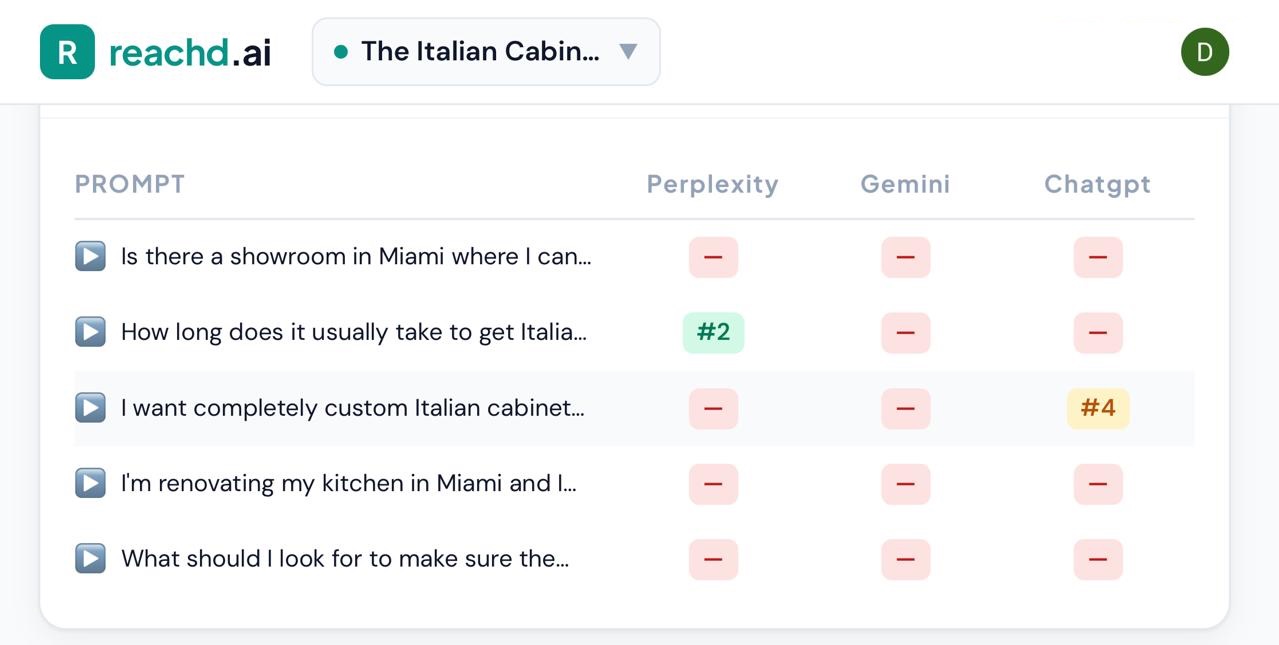
More telling than the number itself was what actually started showing up in AI responses when customers asked about Italian cabinetry in Miami. ChatGPT and Perplexity began including The Italian Cabinet in their recommendations, with direct links back to the website and specific descriptions of what the business offers.
One week later: every query covered
We ran the full scan again on March 16, with a fresh set of five customer queries across all three platforms.
The pattern had shifted noticeably. Where the March 12 scan showed The Italian Cabinet appearing in two out of fifteen possible query-platform combinations, the new results showed a mention on every single query. At least one AI platform now includes The Italian Cabinet in its response to each of the five customer scenarios tested.
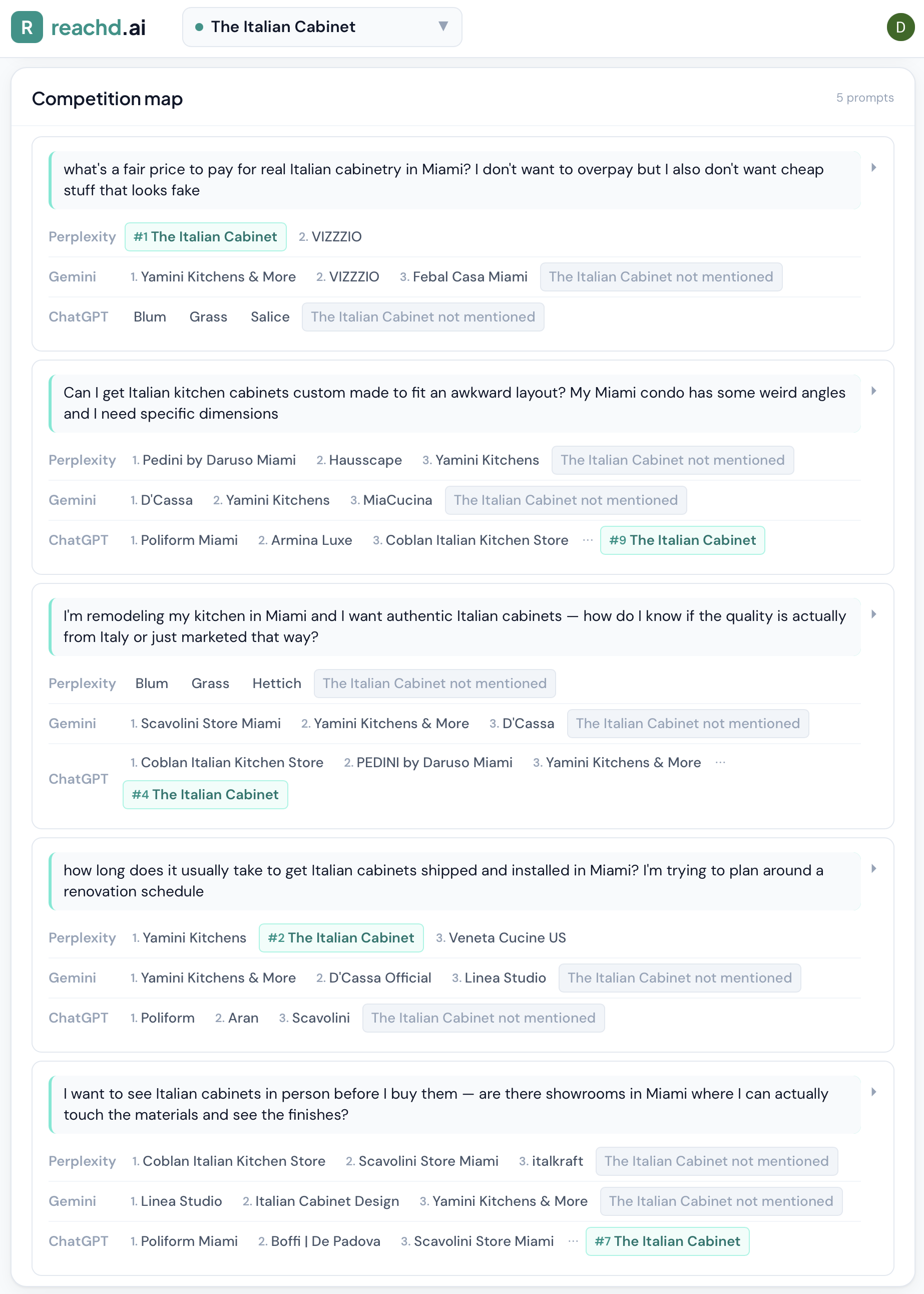
Some of the positions were particularly strong. On a query about fair pricing for Italian cabinetry in Miami, Perplexity returned The Italian Cabinet as the #1 result. ChatGPT mentioned the business in three different query types, including responses about custom kitchen dimensions and authentic Italian manufacturing quality.
Gemini remains the one platform that hasn’t picked up on the business yet, which isn’t unusual for a domain this young. Each platform has its own data sources and update cycles, and progress tends to happen unevenly across them.
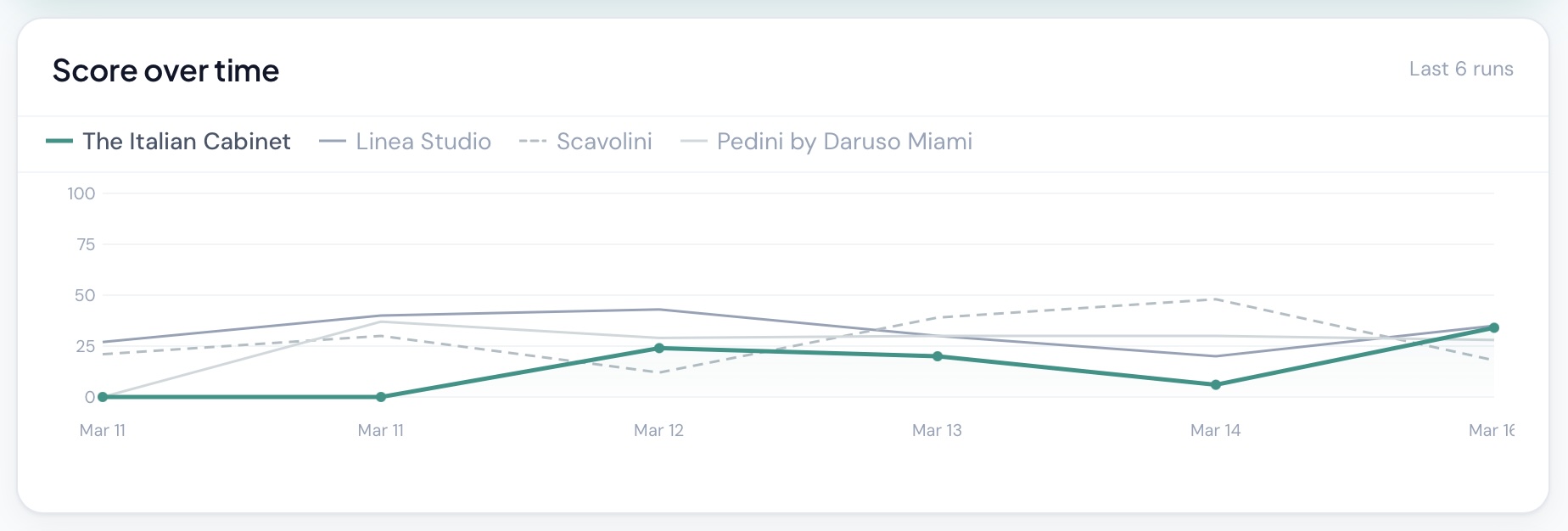
The AI Visibility Score moved from 24 to 34 out of 100. Perhaps more significant than the score itself is the breadth of coverage: being mentioned on every query tested, across different types of customer intent, suggests that AI models are building a more complete picture of what this business offers.
The competitor chart over the same period puts this in perspective. Established businesses like Linea Studio, Scavolini, and Pedini by Daruso Miami had visibility scores in the 25-40 range throughout the week. The Italian Cabinet started at zero and by March 16 was tracking at a comparable level, essentially closing the gap with competitors who have been in the market for years.
What to take away from this
The interesting part of this case is the trajectory. A business that was completely invisible to AI on March 11 had consistent coverage across multiple platforms and query types by March 16, reaching the same range as established competitors. There was no content marketing campaign, no backlink outreach, no months-long SEO effort. The changes were specifically aimed at how AI platforms discover and evaluate businesses.
It’s also worth noting which platforms responded and how. ChatGPT and Perplexity together handle an enormous volume of recommendation queries, and the way they surface businesses is fundamentally different from traditional search. They name a handful of options and explain why each one deserves attention. There’s no scrolling through ten pages of links. If a business makes that short list, it gets a disproportionate share of the conversation.
For businesses in categories like luxury home services or interior design, where customers tend to do careful research before reaching out, it may be worth checking whether AI platforms are even aware they exist. The answer can be surprising.