Background
BeKnown Brand is a content agency in Scottsdale, Arizona, with its own podcast and video studio. The studio has six filming setups and rents by the hour, and the agency’s team can film, edit and publish the result. Its customers are podcasters, YouTube creators and business owners, and many of them now ask ChatGPT, Google AI or another AI engine where to record a podcast nearby or which studio has the best lighting for YouTube.
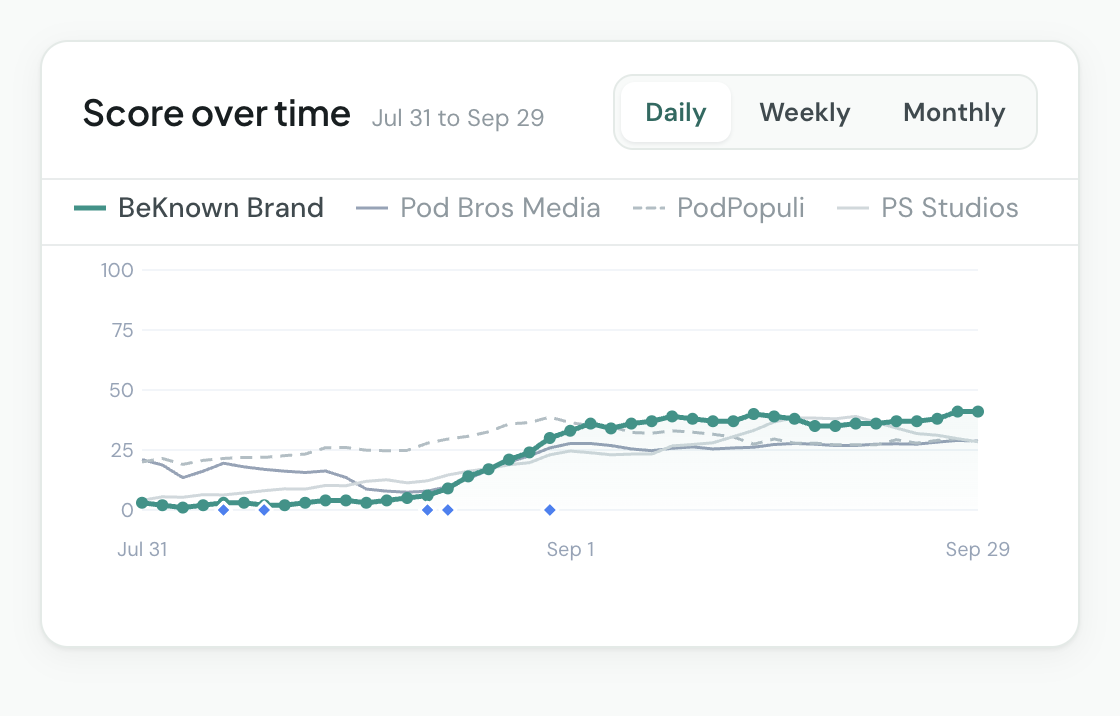
In the first weeks of Reachd analysis, at the start of August, AI recommended SNEAKY BIG, PodPopuli, Just Push Record Studios and Pod Bros Media. BeKnown Brand stood 38th of 107 studios and was named in 3% of answers. A podcaster who asks AI for a studio calls one of the three or four names in the answer, so at 38th place the booking went somewhere else.
Goals
- 01 Get recommended by ChatGPT and other AI engines when people ask where to record a podcast or a video in Scottsdale
- 02 Move ahead of the studios AI recommended first
AI also had to know what the studio offers, because that is what people ask right before they book: how many guests fit on a set, which cameras and lights come with a session, whether editing is included and what an hour costs.
Results
- First place in a month A month after the first analysis, BeKnown Brand became the studio AI recommends most in Scottsdale, up from 38th place. By the end of September it led 93 studios.
- Nearly one customer in two The studio was named in 46% of AI answers, up from 3%, and no other studio was named in more than 34%. Its AI visibility score, which also counts how high it is named, reached 41 against 29 for the next studio.
- Three ChatGPT answers in four In ChatGPT alone the studio went from about one answer in twenty to three in four, and ChatGPT passed on its setups, its size and both hourly rates.
How the studio got to first place in AI recommendations
The owners did the work themselves, on their Webflow site, without a developer. Every day Reachd showed which questions customers asked AI, which studios it named on each and which pages it read, and the feed named the page to change and what it should say. The first analysis found two gaps. Competitors’ studio pages spelled out their cameras, lighting and what a session includes, and AI credited them for it, while BeKnown’s home page gave no address in a form AI reads. From September Claude, connected to Reachd through MCP, did the writing.
- Early to mid-August
A studio page that answers the booking questions
The studio page started answering what people ask before they book: how big the studio is, what the monthly packages from $800 include, where to park and how to load equipment. Separate pages went up for podcast studio and video studio rental in Scottsdale.
From 38th place to 9th - Late August
A page for every setup, and a sitemap that lists them
Each of the six setups got a page with its purpose and how many people it fits, and the pages got structured data, so AI reads the address, the services and the prices as facts. The owners also found that the sitemap, the file that tells Google and AI engines which pages exist, listed only part of the site. Once it was rebuilt, AI began citing setup pages it had never cited before.
First place - September
Claude makes the daily changes
The owners connected Claude to Reachd and to Webflow. Each day Claude reads the new recommendations, writes the text and places it on the page, and an owner reviews and publishes it. The studio page gained a short summary of the studio, the number of shows launched there and client results from Google reviews.
Named in 46% of answers
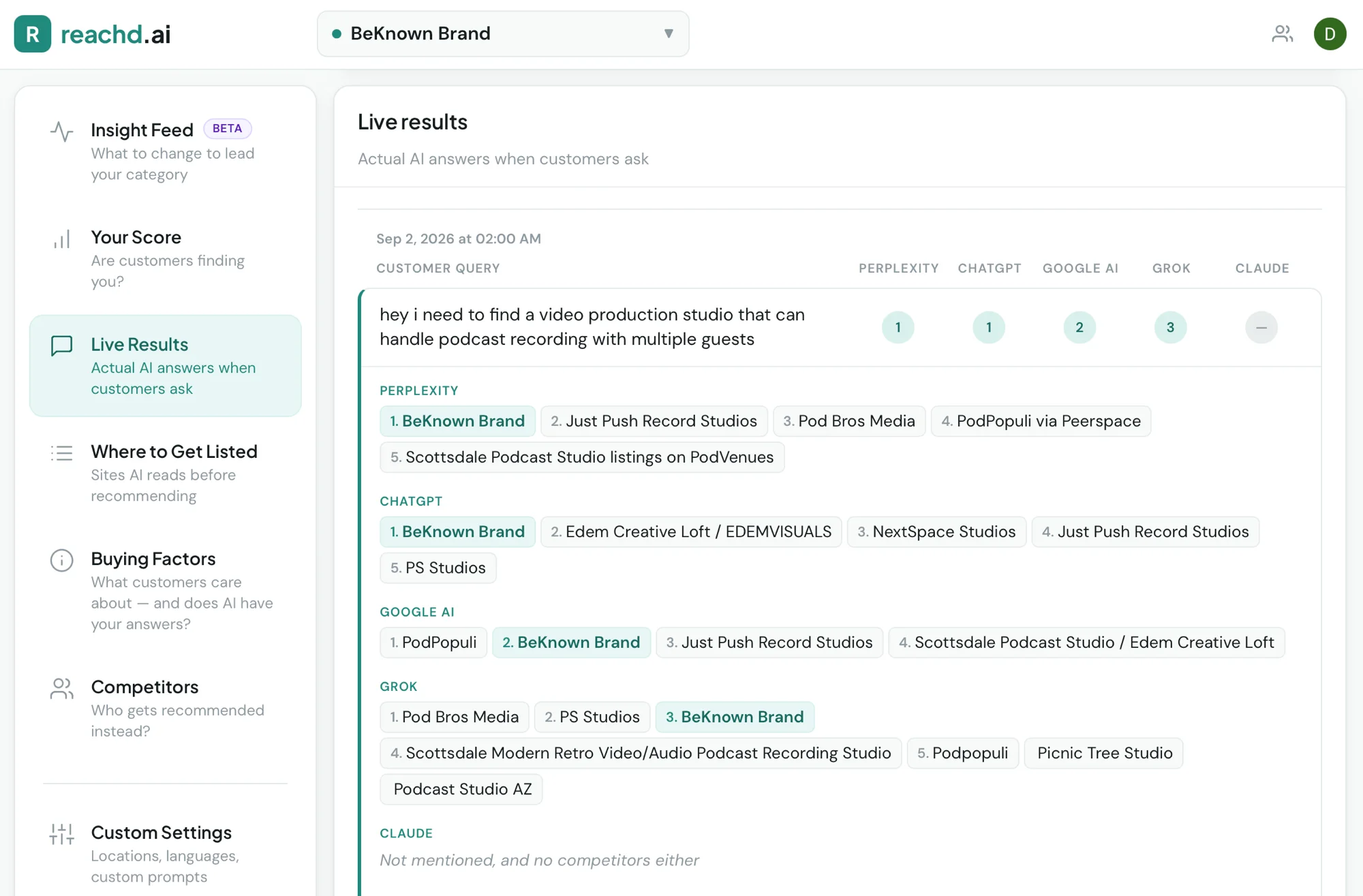
By late September the studio page was the page AI cited most often when it recommended BeKnown Brand. Asked for a video content agency with a proper studio, ChatGPT answered “My first call would be BeKnown Brand Studio” and went on with the page’s own facts: six filming setups, more than 1,500 square feet, $129 an hour for a solo session and $169 for a multi-camera podcast.
A page missing from the sitemap may never be read by AI, however well it answers the customer.
The six setups, the rates, the editing team and the parking were all there before August. The owners, working from the Reachd feed, wrote them down where AI reads and made sure AI could reach every page. A business can check what AI says about it and see which of its pages AI already reads.