Background
The company builds trading, market data and risk software for banks, brokers and funds, and it hires senior Java, C++, Python and front-end engineers for two offices in Europe and for remote roles. It competes for the same people as Revolut, Exness, FxPro and other well-known fintech employers, most of them far bigger and far better known.
More and more engineers start a job search by asking ChatGPT, Google AI or another AI engine which fintech companies hire seniors, sponsor visas and help with relocation, and they apply to the names in the answer. In the first Reachd analysis, AI answered developers’ questions about where to work with Exness, eToro, Amdocs, EPAM and GitLab, and across 270 answers it did not name the company once. A strong candidate who started there chose where to apply without ever hearing of it.
Goals
- 01 Get recommended when senior engineers ask AI which fintech companies to work for
- 02 Stand next to Revolut, Exness and other big fintech employers in AI answers
The company also had two narrower aims. AI had to quote the company’s own pages instead of stray copies of its vacancies, and the company had to show up on the questions candidates ask right before they apply: visa sponsorship, relocation for the family and the stack each team works in.
Results
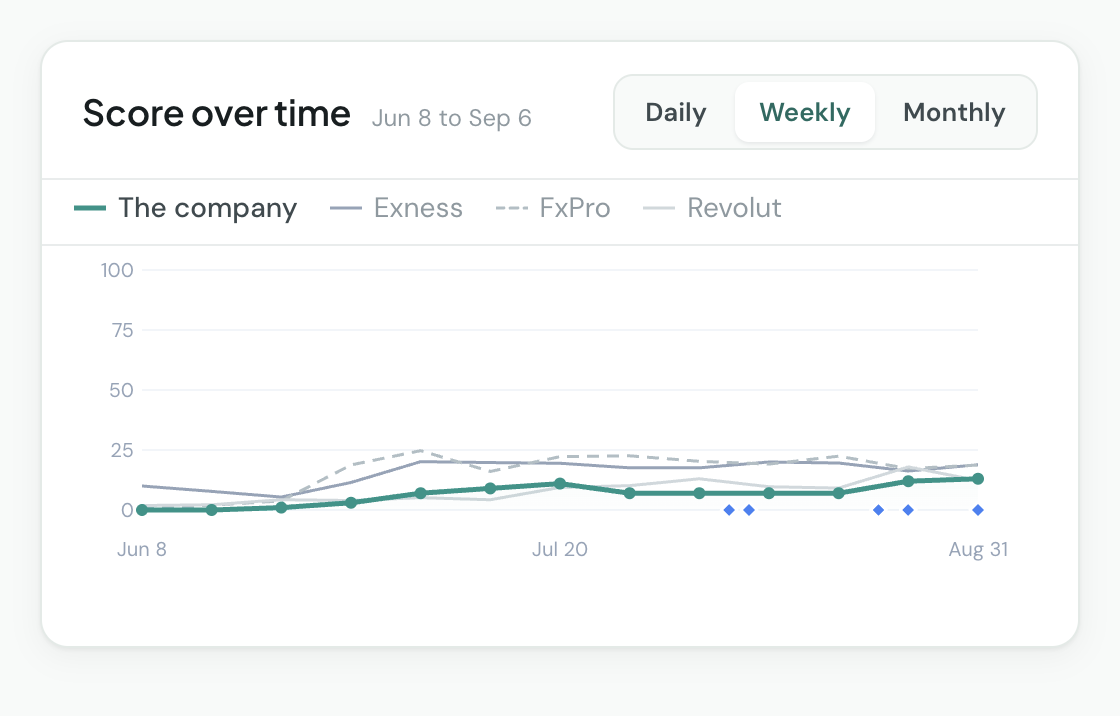
- #2 of 216 in under four months From not being named at all, the company became the second most recommended employer for senior fintech engineers on these questions, level with Exness and ahead of Revolut. Only FxPro scored higher.
- First in ChatGPT on visa and relocation On questions about visa sponsorship and relocation, ChatGPT named the company in 19 of 29 answers and put it first in 9, more often than Revolut (13) or Exness (11).
- Its own careers pages in the answers AI cited none of the company's pages in the first weeks. By the end of August ChatGPT took the relocation terms straight from its careers page and called the company the strongest lead for an engineer who wants to move.
How the company built an employer brand that AI recommends
The company’s own team did the work, following the Reachd recommendations. The daily analysis showed which questions engineers asked AI about jobs, which employers it named on each and which pages it read. Many answers relied on copies of the company’s vacancies on job sites, so the team worked on both ends: more of its roles on the job boards AI reads, and pages on its own site that state what a candidate asks about. The same steps for any hiring team are laid out in how to get ChatGPT to send the right candidates to a company.
- Mid-June
Vacancies on the job boards AI reads
The company posted its open roles on more job boards, and AI engines started citing those postings in answers about fintech jobs. Each posting named the stack, the product and the relocation package, which gave an answer something to repeat.
From not named to #18 of 172 - Early July
Country hubs and a page per stack
The careers section moved from one filtered list to a hub for each office country and a page for each stack: Java, C++, Python, Angular and Node.js. Every page had its own text about the work, and every vacancy carried job posting markup that search engines and AI read as a live opening.
#4 of 202 - By late August
Pages about the company, its culture and relocation
The careers page described how the teams work and what the company builds, and a section on relocation stated the package in plain sentences: visa sponsorship, flights and the first month of accommodation for the engineer and the family, and help with work and residence permits. More postings went up on LinkedIn, startup.jobs, 4dayweek and other boards.
#2 of 216, ahead of Revolut
When ChatGPT recommended the company, it listed the relocation section of the careers page point by point: visa support, entry and residence permits, flights and the first month of accommodation. Perplexity called the company the best match for an engineer who wanted Java or C++ work and a paid move, since its postings stated both in so many words.
AI recommends an employer it can quote. A relocation package that only comes up on a recruiter’s first call never reaches the engineer who asked ChatGPT where to work.
Most of what the company published was already true about it. The relocation package, the stack of each team and the way the teams work existed before. Working from the Reachd dashboard, the team put them on pages and postings AI reads. A company can check what AI says about it and see which of its pages AI already cites.