Background
The Italian Cabinet designs Italian kitchens, wardrobes and interior doors for homes in South Florida. Everything is made to order by factories in Italy, and the company runs the project from the first consultation and 3D design to installation. Its buyers are about to spend serious money on a kitchen, and before they visit a showroom many of them ask ChatGPT, Google AI or another AI engine where to find real Italian cabinets, how long delivery takes and whether Italian finishes survive Florida humidity.
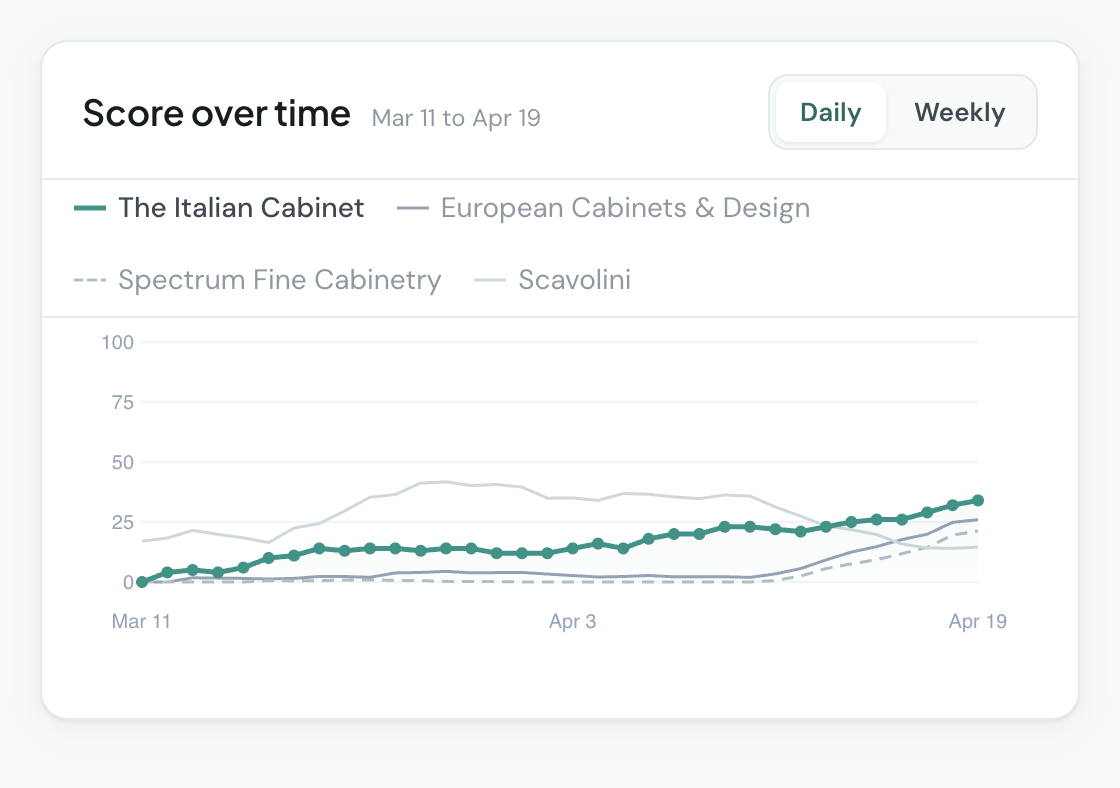
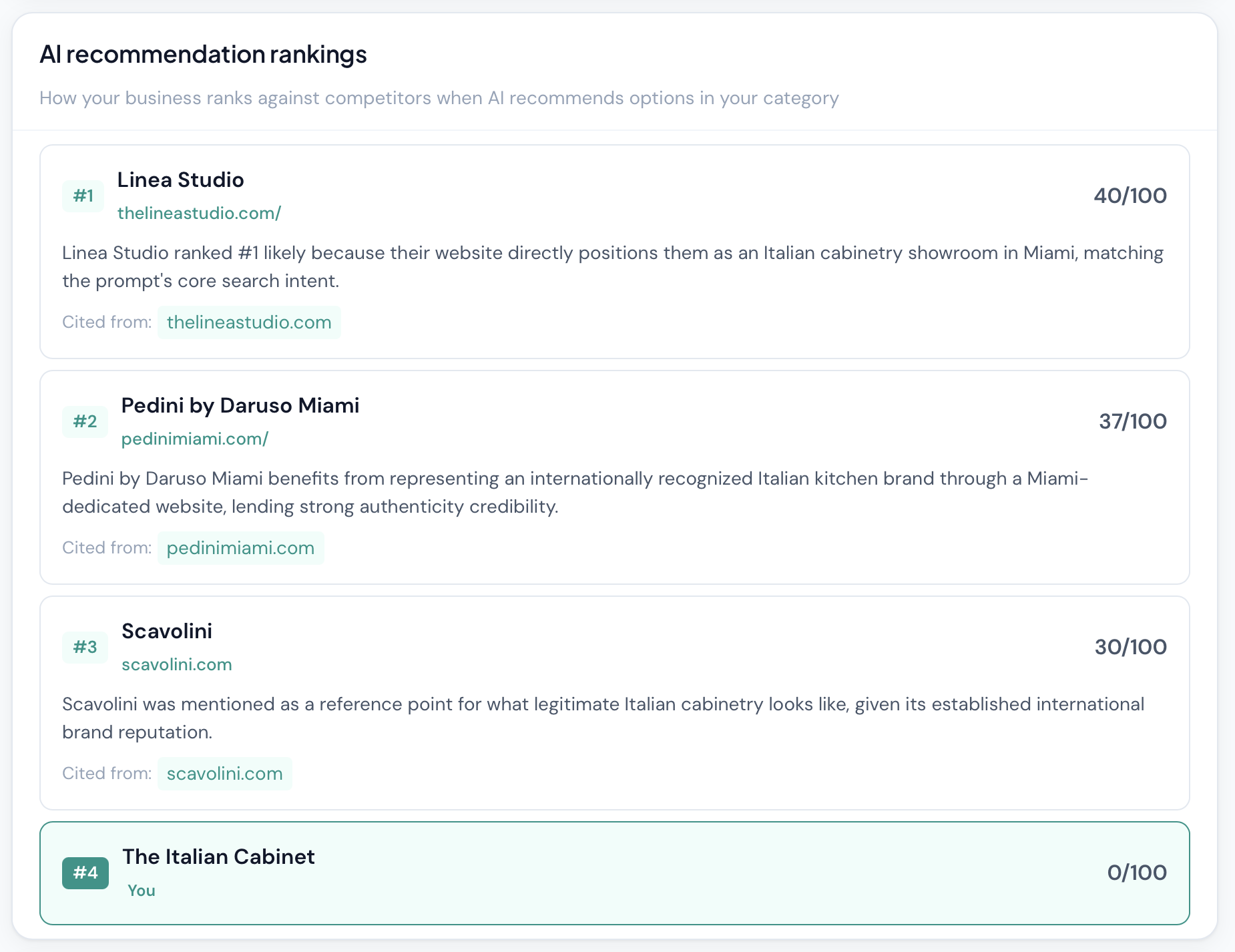
The company launched its website on March 11, and Reachd ran its first analysis the same day. AI recommended Linea Studio, Pedini and Scavolini, companies with years of history on the web, and did not name The Italian Cabinet in a single answer. A buyer starts the shortlist with the names AI gives, so on day one the company was not on it.
Goals
- 01 Get recommended by ChatGPT and other AI engines when buyers look for Italian cabinetry in South Florida
- 02 Catch up with the companies that had years of history behind them
A new site has no reviews, no listings and no articles about it, and AI leans on all three. So the company aimed at what it could control from day one, its own answers to the questions buyers ask just before they choose: delivery times, custom sizes, humidity and where to see the cabinets in person.
Results
- Named the next day The day after the first analysis, ChatGPT and Perplexity each named The Italian Cabinet once, citing its home page.
- #1 of 98 in five weeks By mid-April AI recommended the company more often than any other in its category, ahead of Scavolini, which had led all of March.
- From none to 37% of answers The company was named in 37% of AI answers, against 30% for the next company and 18% for Scavolini. Its AI visibility score, which also counts how high it is named, reached 34 against 26.
How a new website got to first place in AI recommendations
Reachd asked AI the questions buyers ask before they visit a showroom, every day, and showed which companies AI named and which pages it quoted. The company used those questions as its content plan. Each question AI answered with somebody else’s page got a page of its own on The Italian Cabinet’s site, written with the facts the team already gave clients in person.
- Mid-March
A page for each question buyers ask
Four pages answered the questions AI kept getting: how long Italian cabinets take to arrive and install, whether they can be made to fit an unusual kitchen, which materials hold up in South Florida humidity and how to furnish a whole home in one Italian style.
From 18th place to 7th - Late March
The factories and the showroom
Each Italian factory the company works with got a page, such as Aran Cucine for kitchens, and the showroom got one too. An article explained how to tell authentic Italian cabinetry from look-alikes, and the site opened in Spanish and Russian.
Third place, behind Scavolini and Pedini - Mid-April
Structured data and a page for every showroom
Structured data gave AI the company's name, showrooms and products as facts. The second showroom got its own page, and a new page set out where in South Florida buyers can see the cabinets in person.
First place of 98
When AI recommended the company, it quoted the company’s own answers. Asked about lead times, it gave the timeline from the delivery page: 14 to 16 weeks in all, with up to a week of design, four to five weeks of production in Italy, eight weeks by sea to the Port of Miami and one to two weeks of installation. The page on humidity was cited more often than any other page except the home page.
A young website has no history for AI to borrow, so every buyer question it answers well becomes a reason for AI to name it.
None of these pages needed history. The delivery times, the factories and the advice on humidity were things the company already knew, and its team wrote them down where AI reads, one question at a time. A business can check what AI says about it and see which buyer questions AI still answers with somebody else’s page.